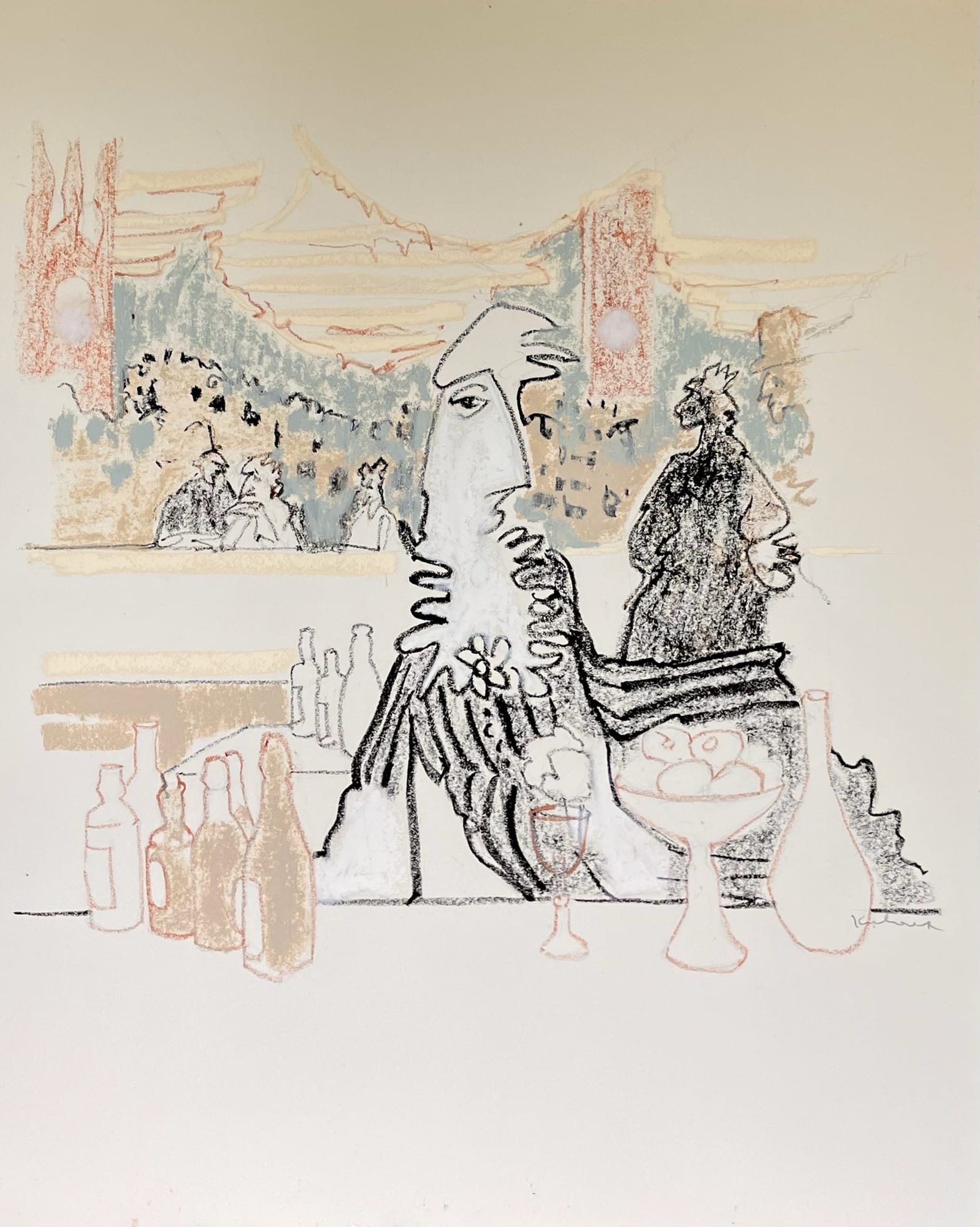
A Bar at the Folies-Bergère, after Édouard Manet
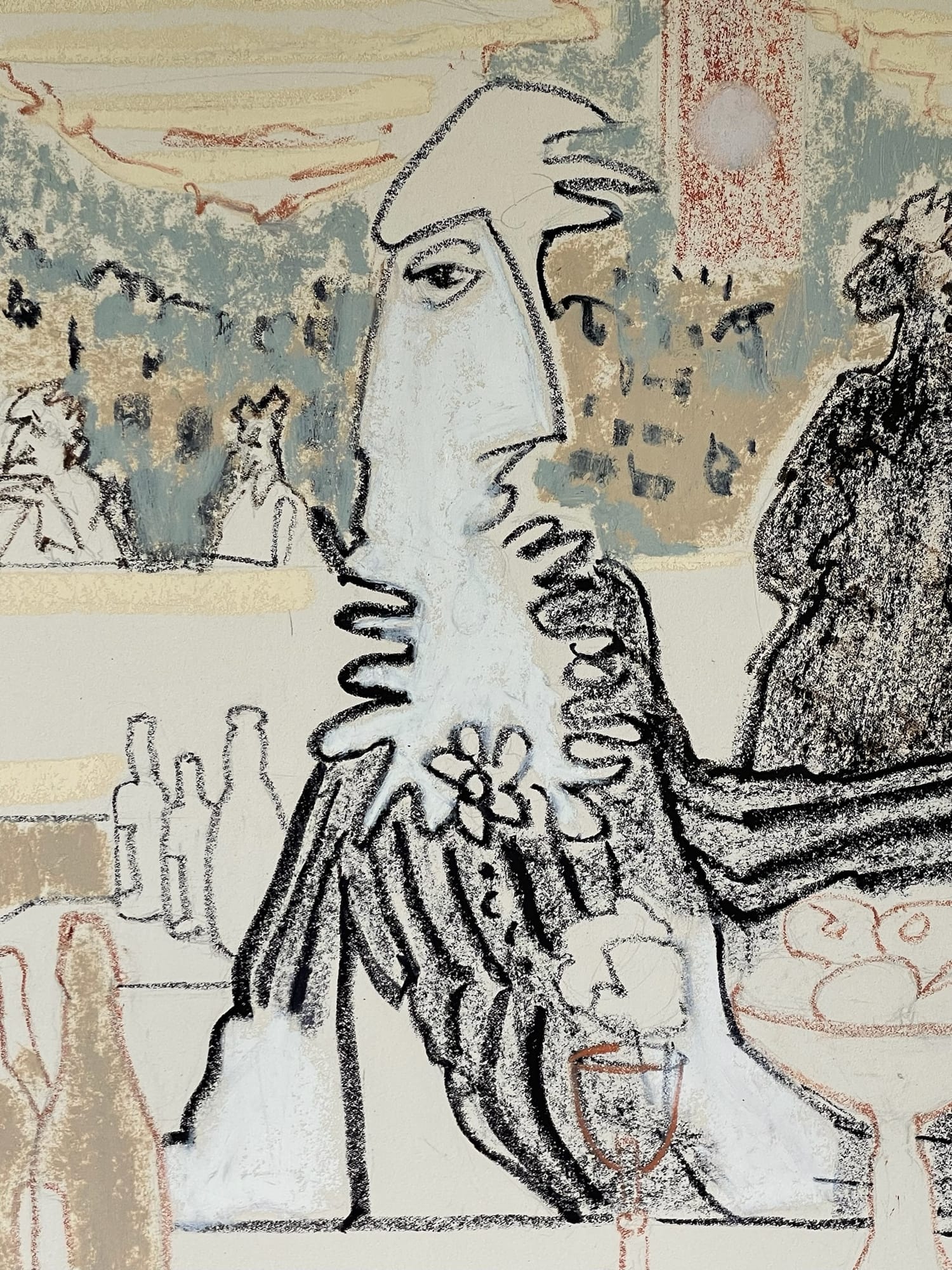
Detail
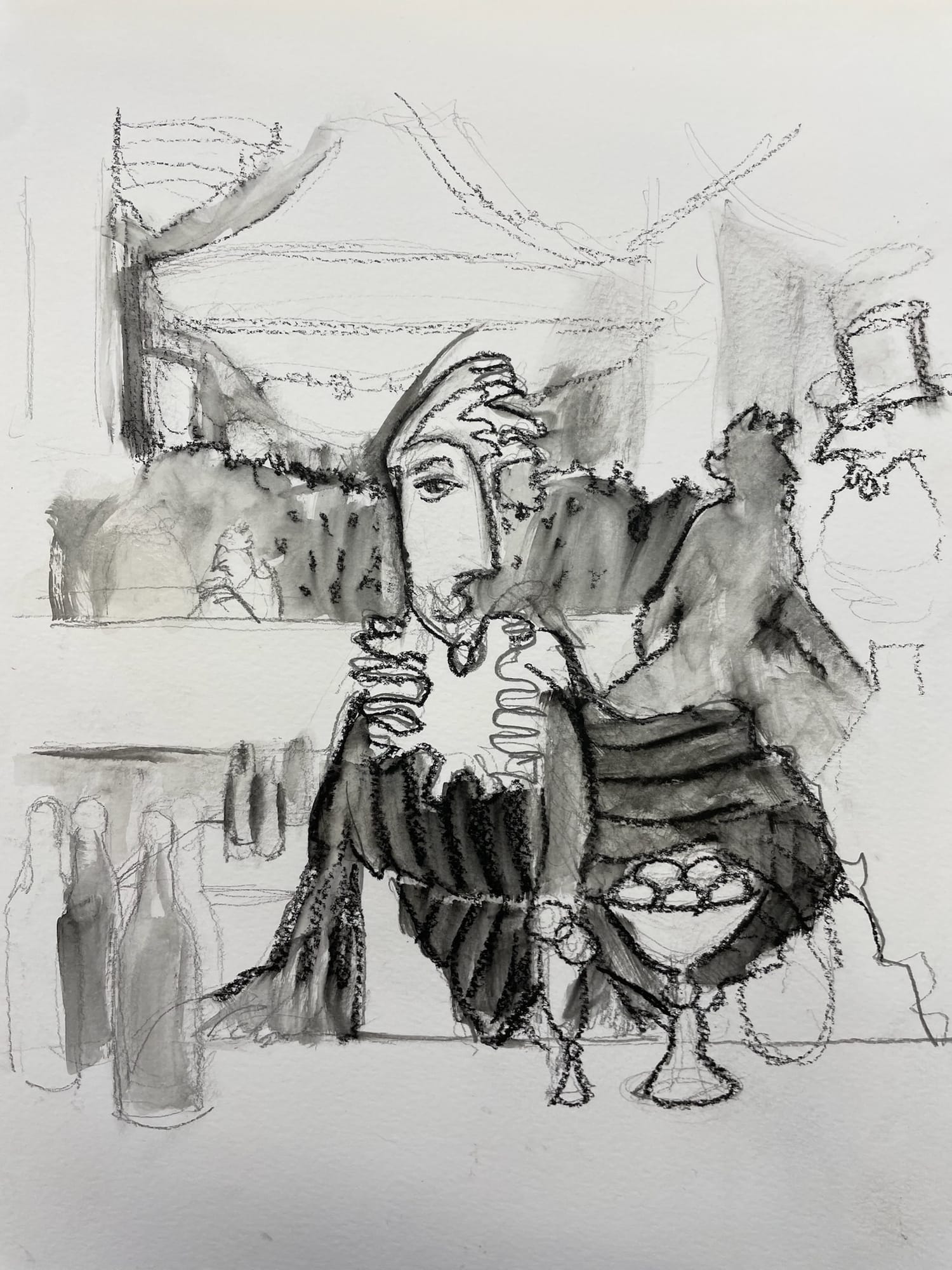
First sketch
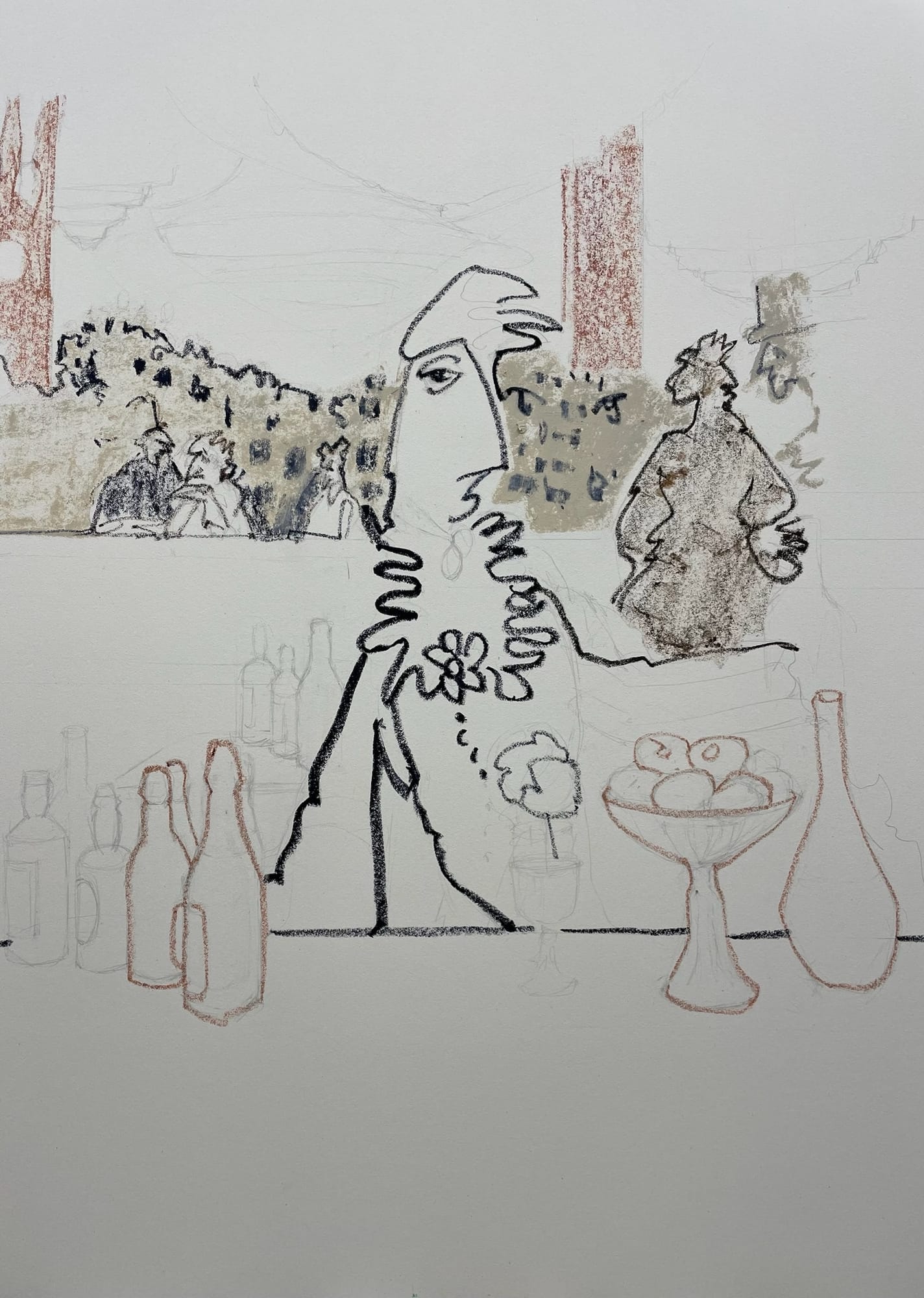
Work in progress
Series
4 works
Detail
First sketch
Work in progress
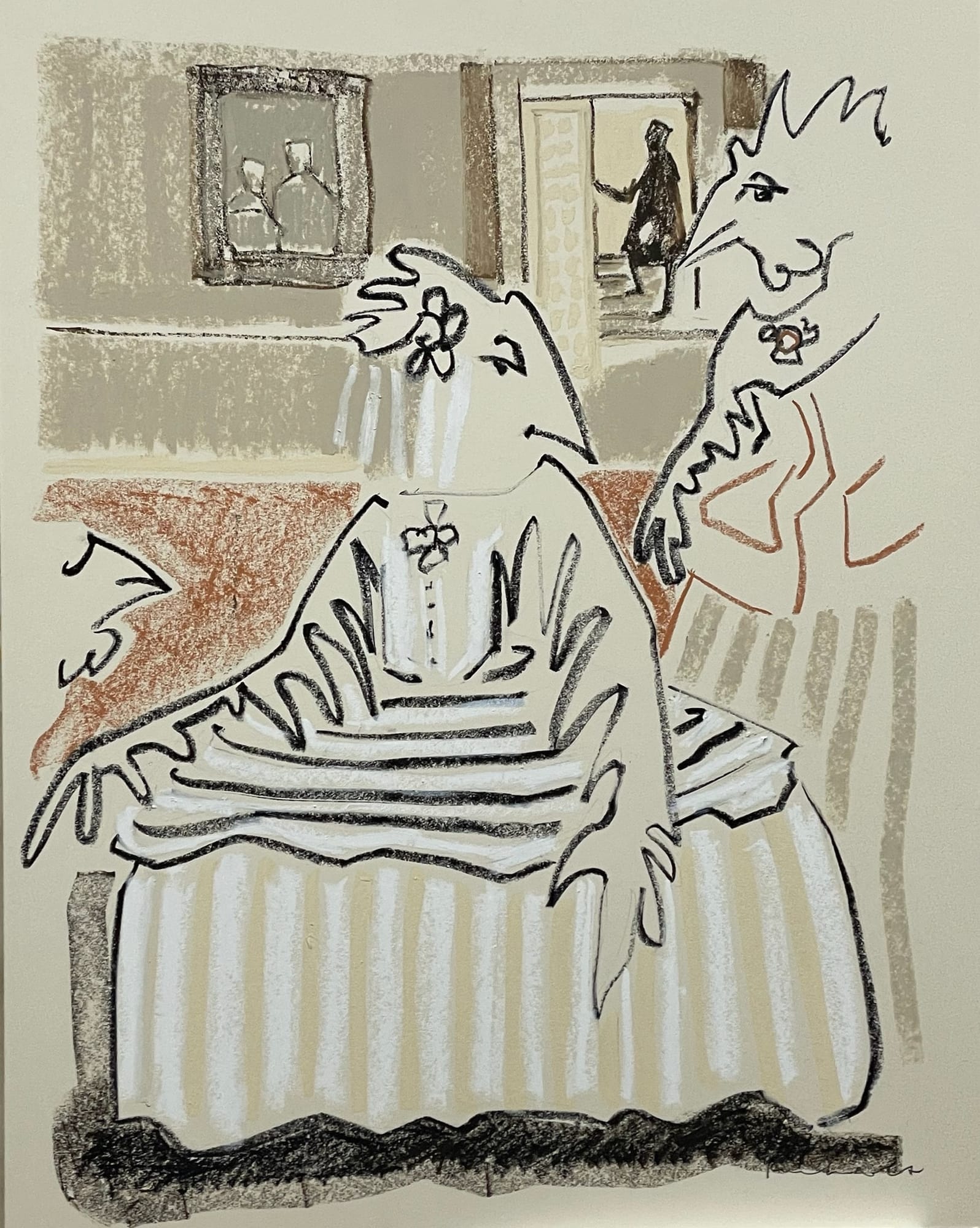
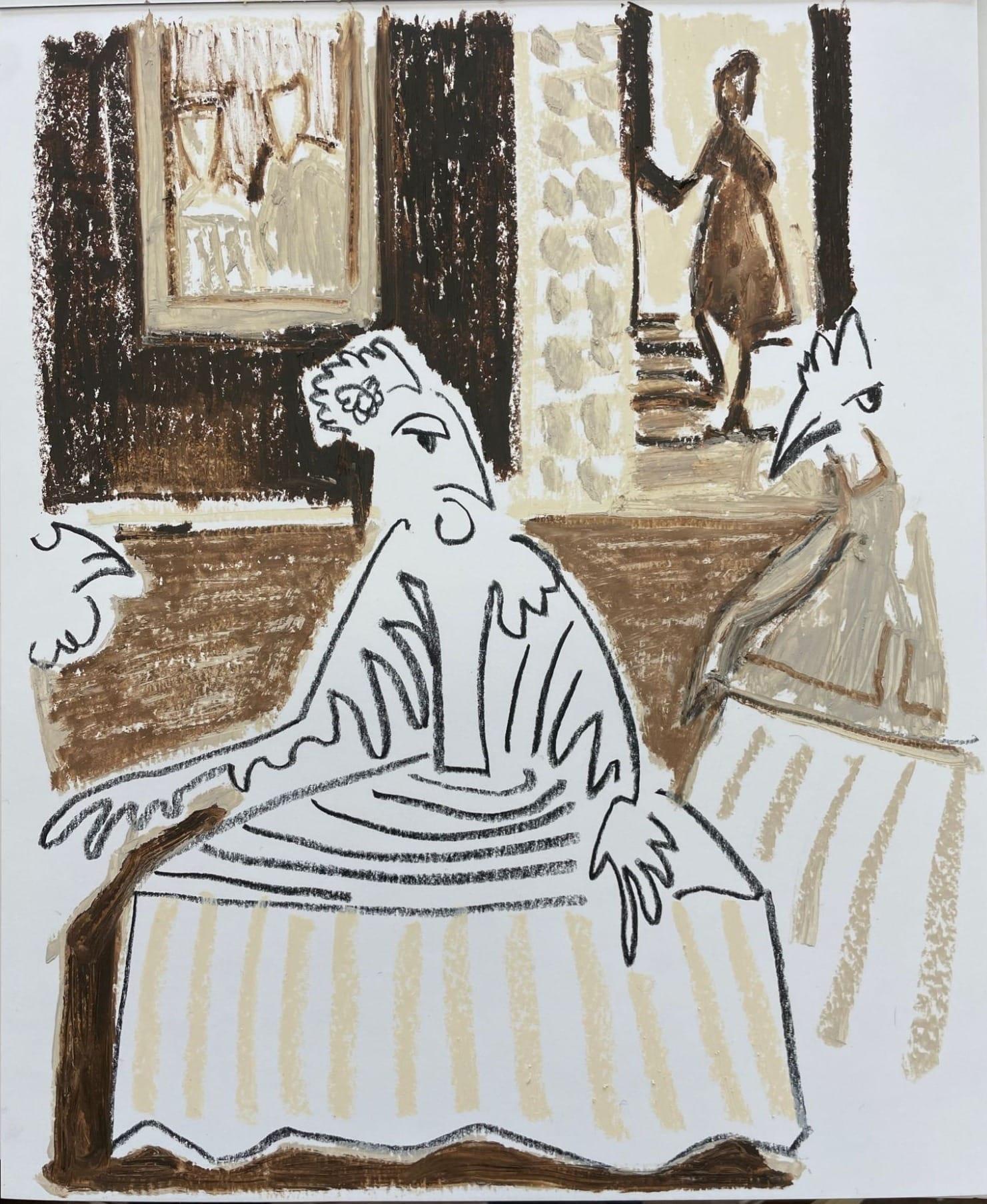
Another version
Making of
From the first lines to both versions.
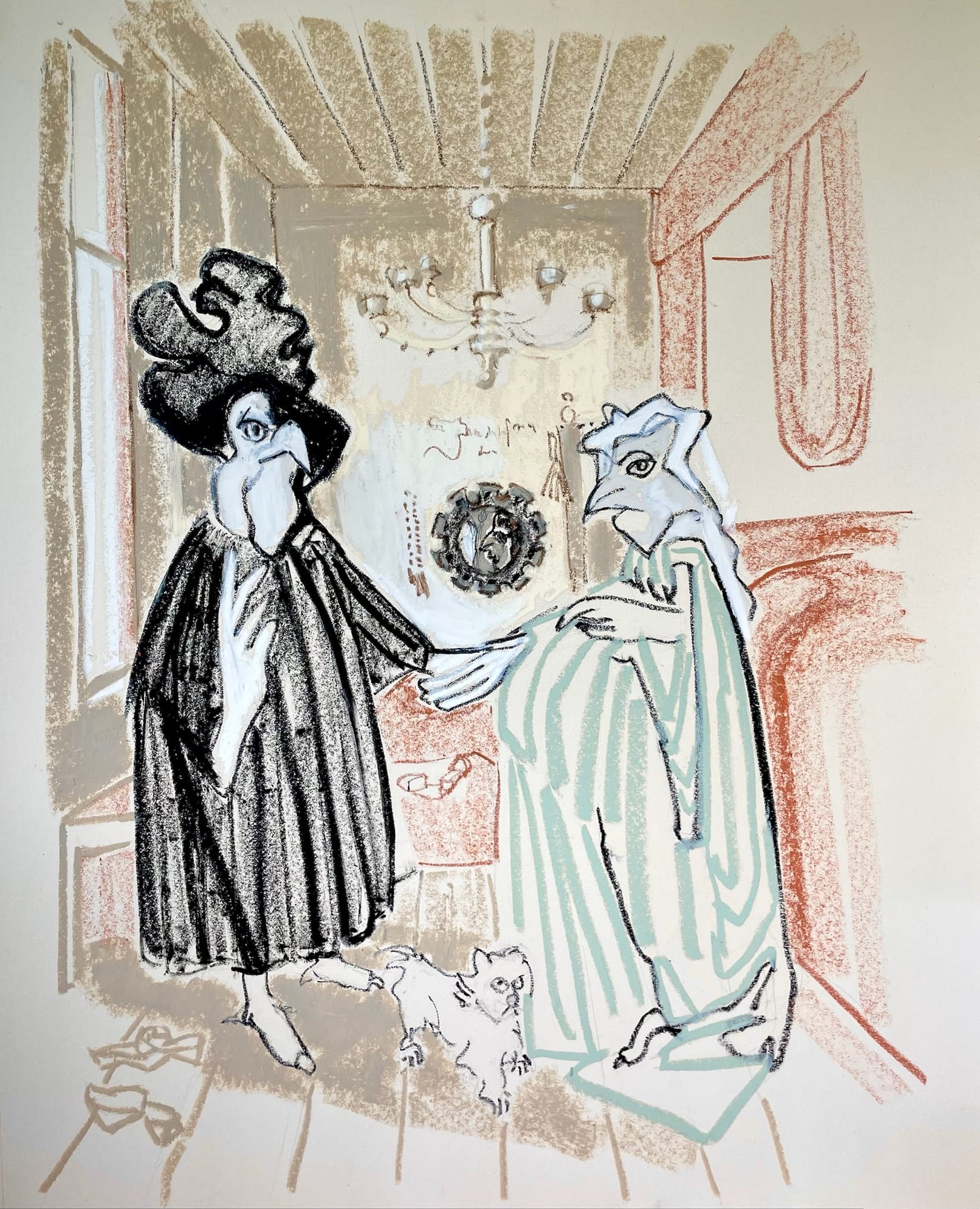
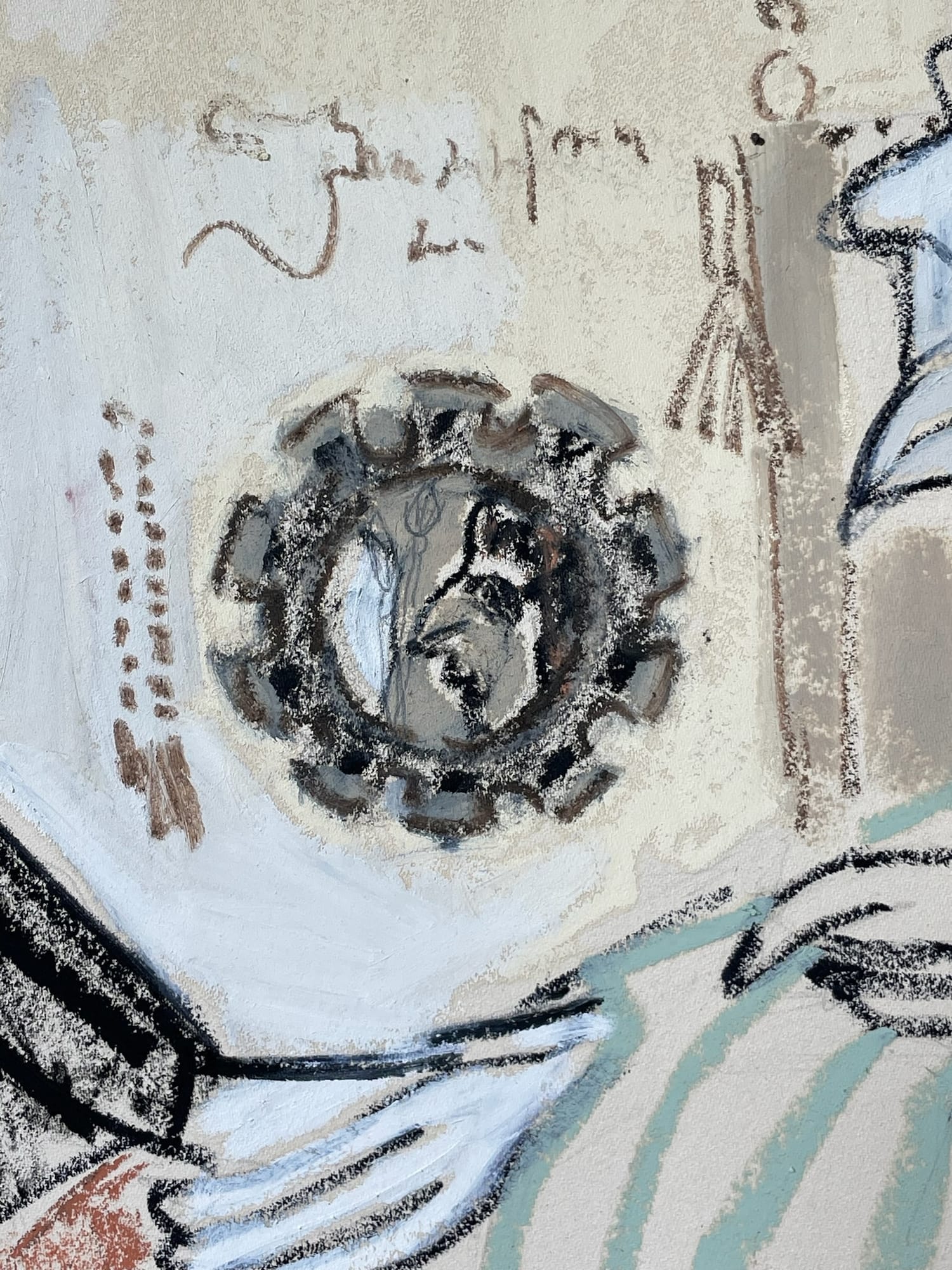
Detail: mirror and inscription
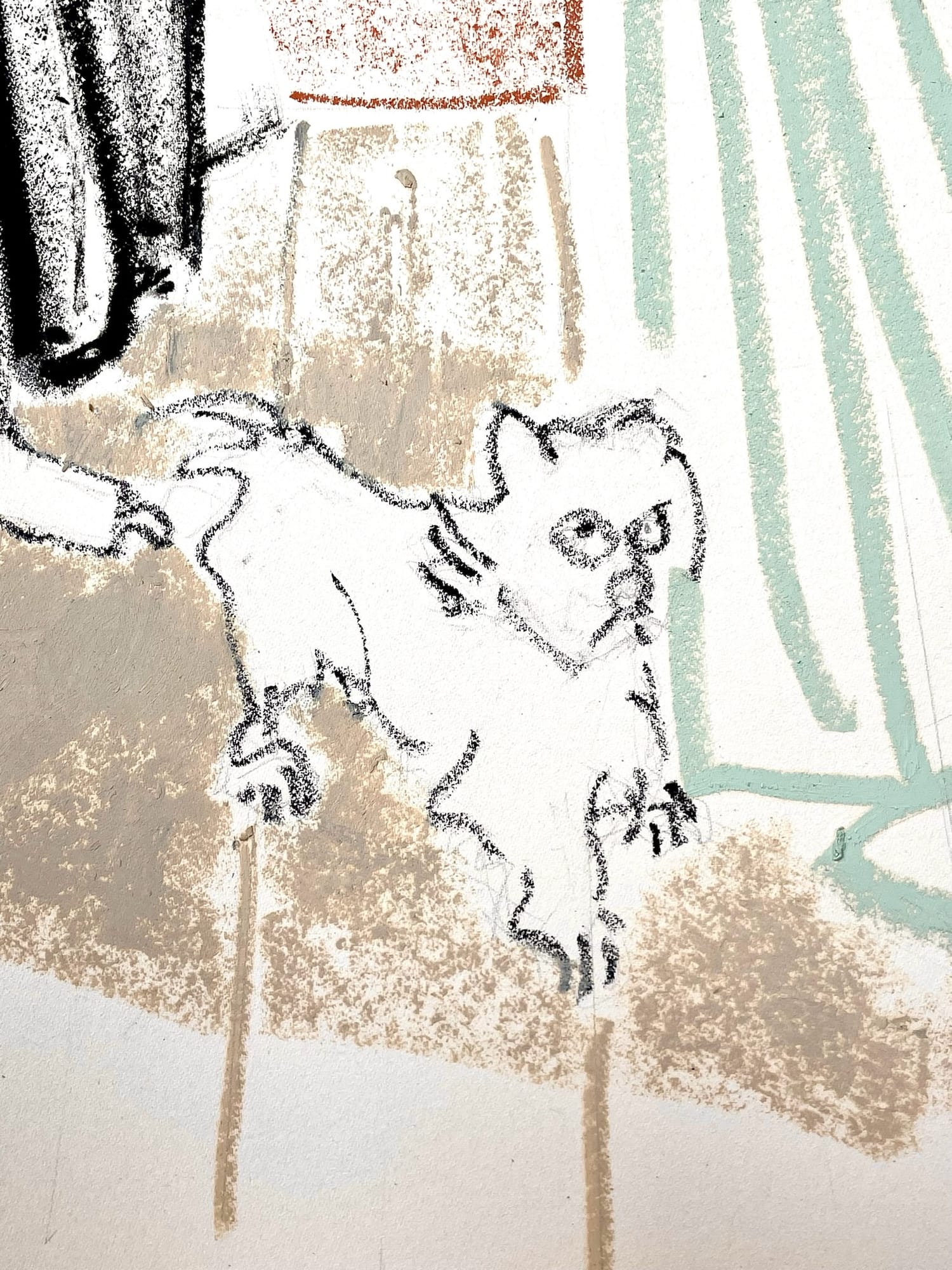
Detail: the little dog
Making of
From the first sketches to the finished sheet on the easel.
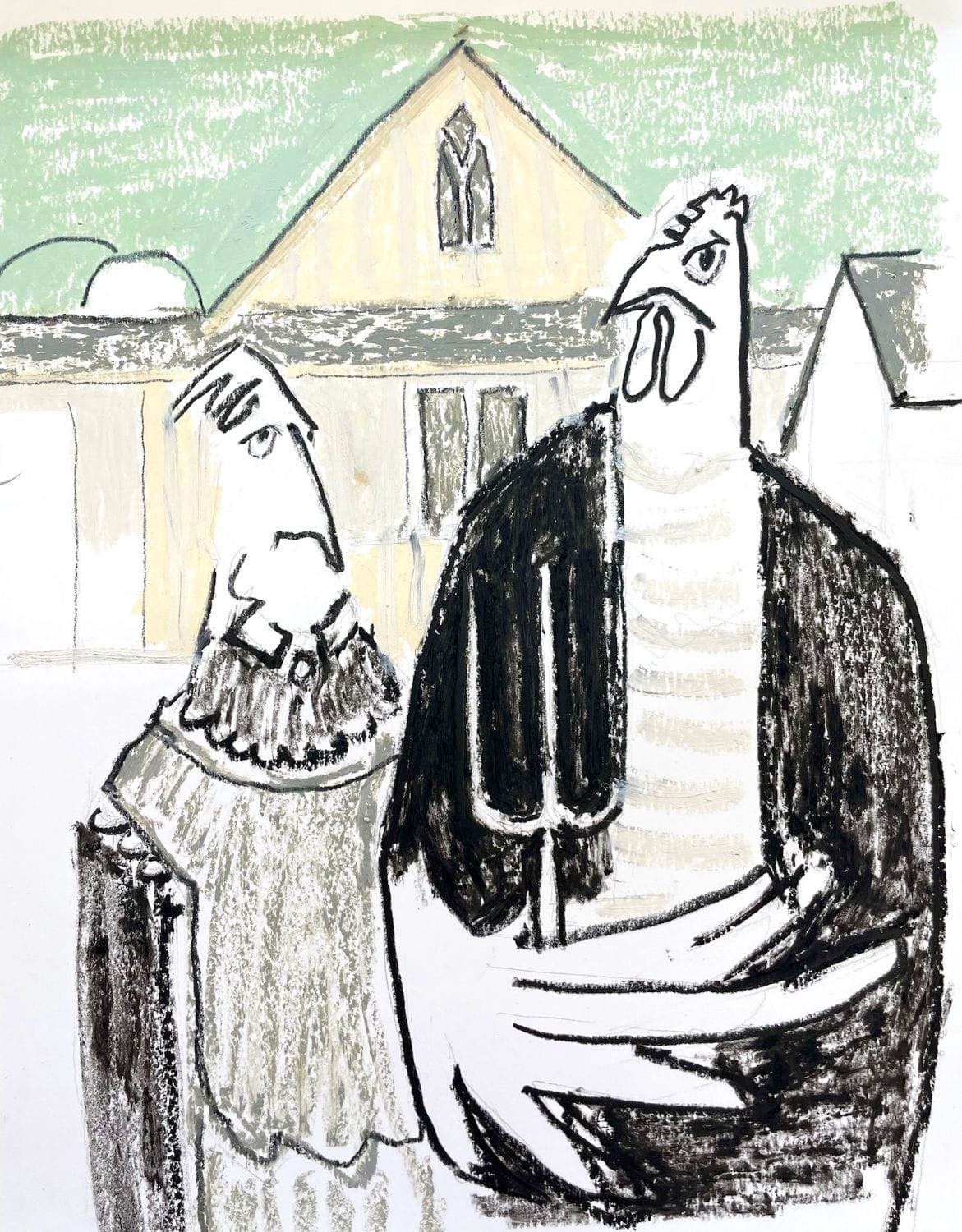
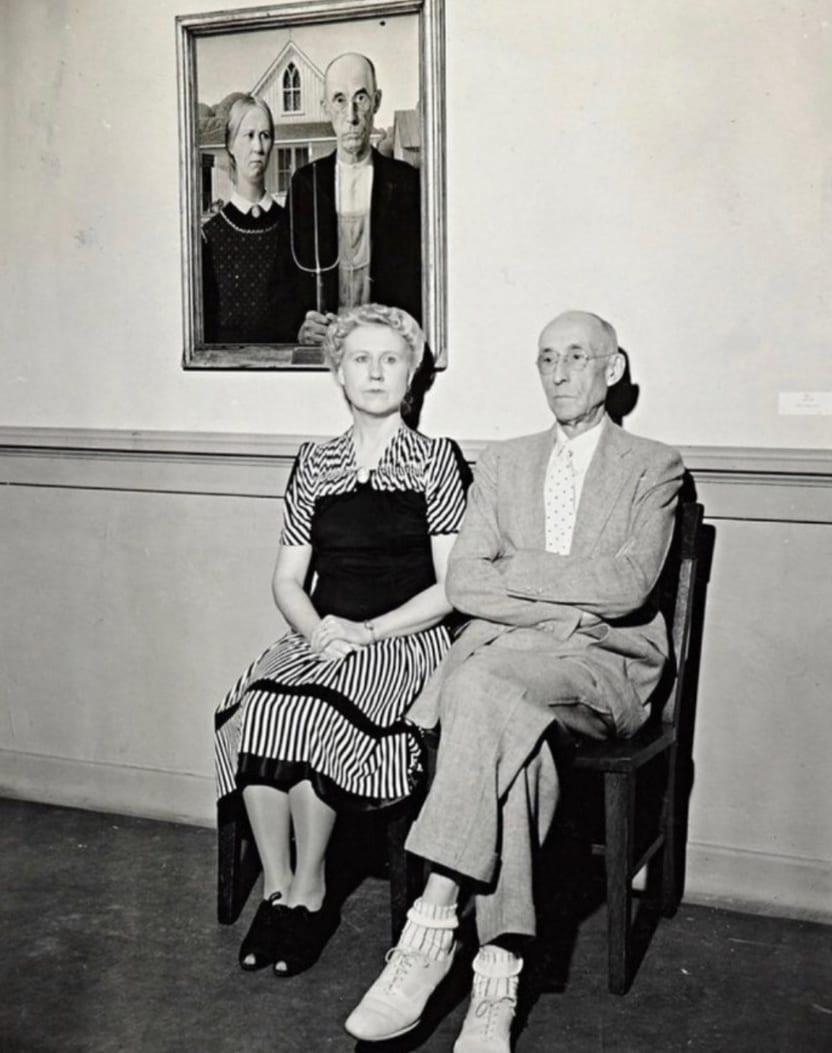
Grant Wood’s models next to the painting: his sister Nan Wood Graham and his dentist Byron McKeeby
What happens when old masterpieces get an animal remake? There is a brief moment of recognition, despite the knot in your brain. I know that one! Or do I? You have to look a second time, more closely, and discover the supposedly familiar anew.
In this series I transpose well-known paintings from art history into the world of chickens. Whether Velázquez’s Las Meninas, a portrait of Edith Schiele, Jan van Eyck’s Arnolfini Portrait, Manet’s A Bar at the Folies-Bergère or Grant Wood’s American Gothic – the motifs remain recognisable, but their human protagonists are replaced by chickens.
This is not only a humorous twist but also a challenge in drawing: how, for example, can the direct, often so meaningful gaze of a person be carried over to a chicken whose eyes sit on the sides of its head? How much of the original has to remain for it to be recognisable, and how much may change so that something new emerges?
Another thought appeals to me as well: over time, famous works of art sometimes take on something almost sacred. People whisper in museums, masterpieces are viewed with reverence, and the art world at times takes itself astonishingly seriously. I want to counter this solemnity with a little lightness. Art does not have to be put on a pedestal. It may also surprise, make you smile and bring joy.
Nor do I leave myself out: in Velázquez’s famous mirror I appear too – albeit as a chicken. A small reminder that I don’t want to take myself and my role as an artist too seriously. In the end, the work should speak for itself, not the artist behind it.